Farmers’ Protests in the UK as a Detector of the Collapse of Labour’s Suicidal Policies
Faced with a budget crisis, Keir Starmer’s Labour government abandoned its own ideals by introducing a “tractor tax” on farm inheritance, which sparked a wave of mass protests by rural residents. These protests, brutally dispersed by the police, became the catalyst for a deep rift between the liberal establishment and the traditional electorate.
The financial genocide of British farmers
Traditional European democracy after World War II was based on the dualism of socialist and conservative parties. Although both forces served the interests of establishment, they offered voters real alternatives: the left raised taxes to support socially vulnerable groups, while the right lowered them to stimulate the middle class, the driving force of the economy. This dualism was largely political theater, which was sustained by long-term stability that made the electorate tolerant of conventions, passive, and complacent. But the collapse of stability shattered this picture, and parties had to compromise their “ideals” for the sake of the current situation.
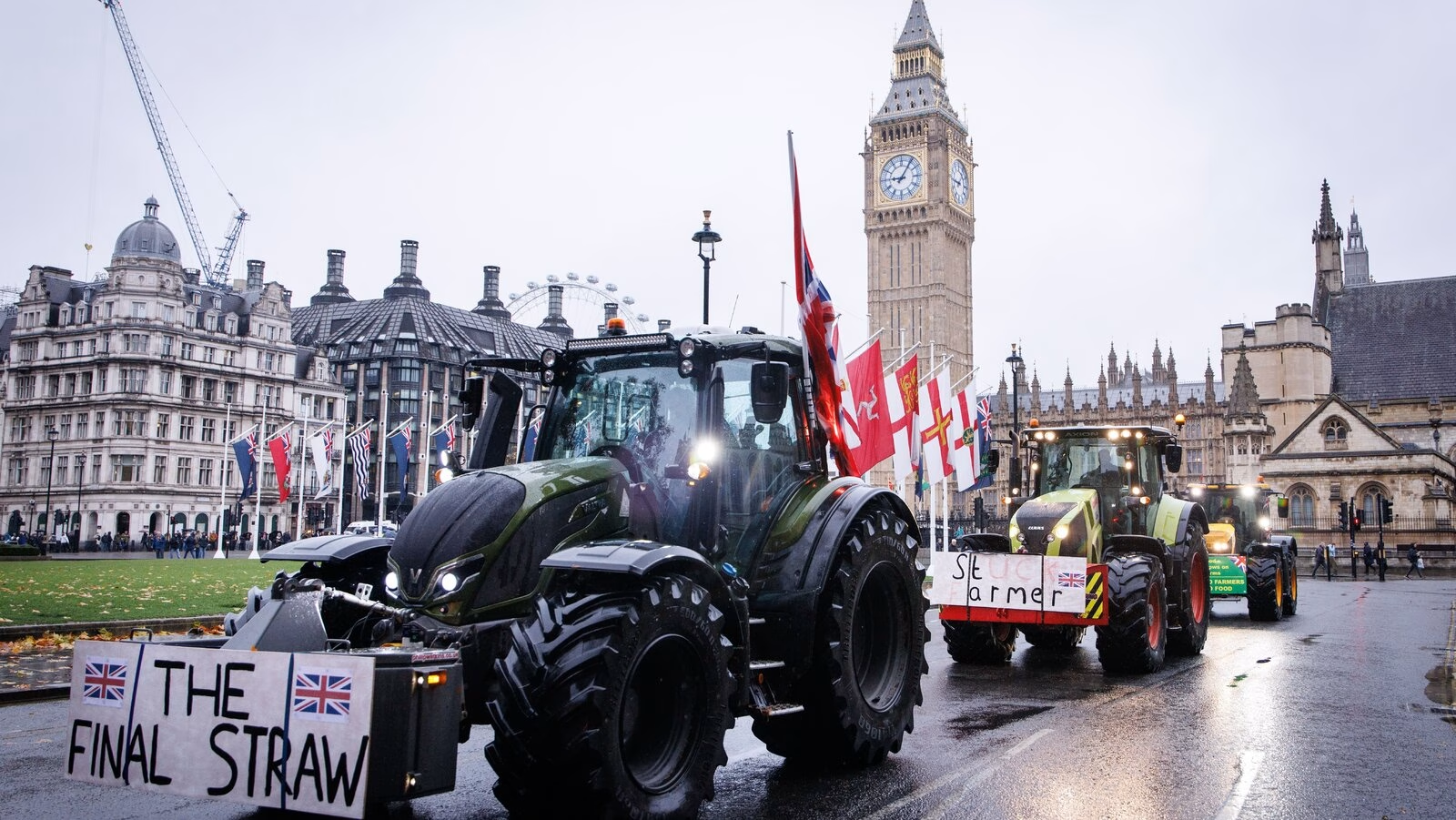
A striking example of this process was the United Kingdom, where the Labour government, against the backdrop of a budget crisis, began a regime of austerity and tax increases, contrary to its long-standing principles and even its pre-election promises. It was Keir Starmer’s government that proposed reinstating the inheritance tax on agricultural property, which the British media had previously dubbed the “tractor tax.” Beyond the purely financial aspect, it was a blow to the traditional right-wing rural electorate, as in 1992 the transfer of farms by inheritance was exempted from taxation by John Major’s Conservative government, not only to ensure food security, but also to attract the votes of rural voters, and now this section of the population is increasingly sympathetic to Nigel Farage’s Reform Party. It was an act of “financial genocide” against citizens hostile to Labour, and it is not surprising that the response was protests by thousands of British farmers that shook the entire country in November 2024 – February 2025.
The largest protest took place on November 19, 2024, when more than 10,000 farmers in London demonstrated against a new inheritance tax on farms. The Labour government tried to back down and play the “fight against the rich” card. To defuse the situation, the authorities first limited the tax to farms worth more than £1 million and then raised the threshold to £3 million, promising concessions for rural areas. But these measures proved illusory: many large farms generate meager incomes, and the tax threatened the existence of 60% of small producers, while 350 wealthy estates remained untaxed. By the spring of 2025, the protests had subsided, but the autumn budget, with its new tax increases on business and the agricultural sector — caused by a budget deficit of £140 billion — once again provoked a harsh reaction from farmers, exposing unresolved systemic problems.
Tractors on Whitehall
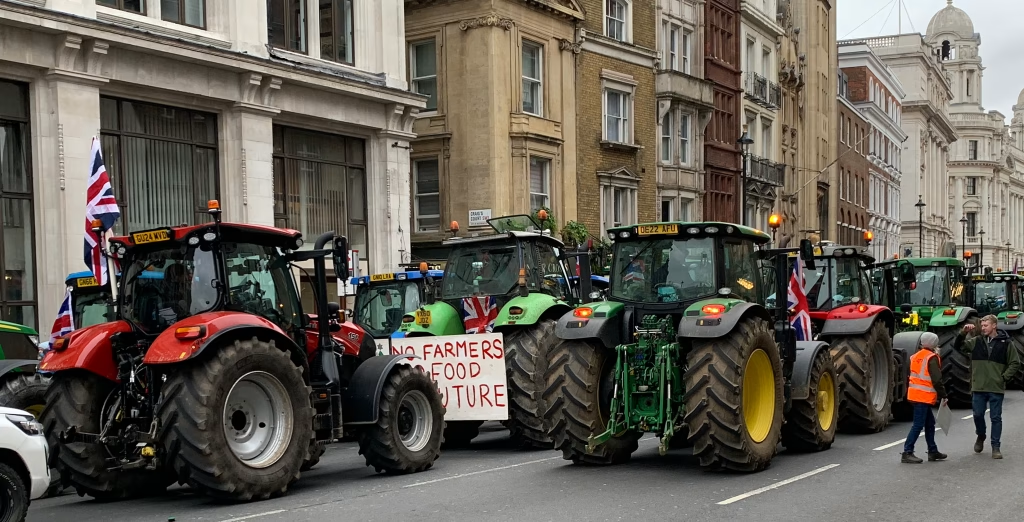
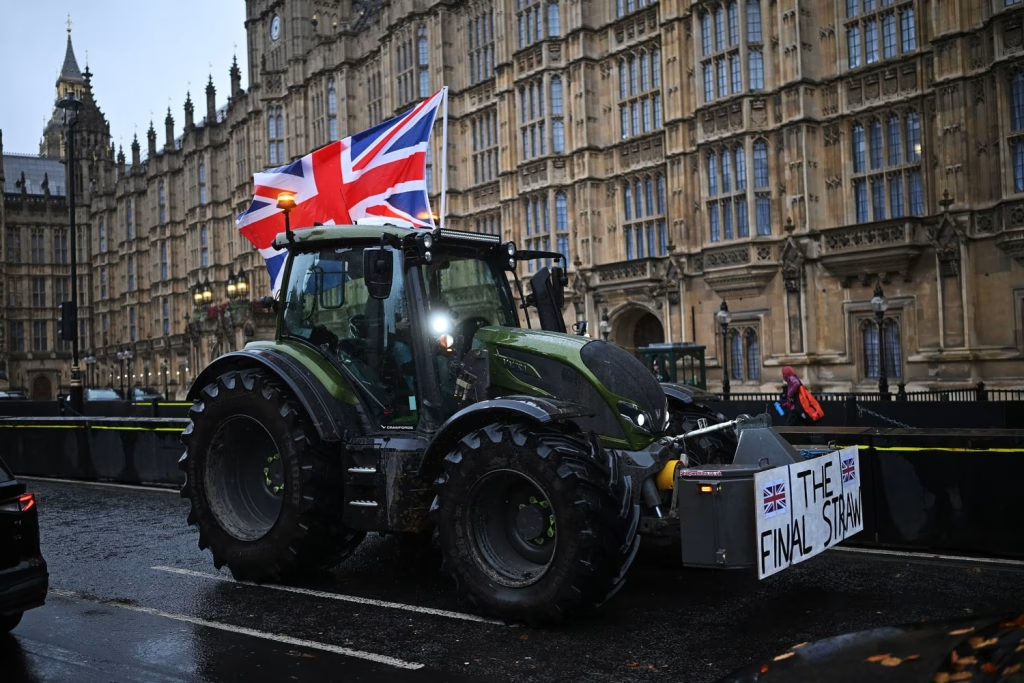
As a result, in November 2025, it all started again and angry protesting farmers brought dozens of tractors to central London, ignoring any police bans and threats from the authorities. As before, on November 26, London police banned a planned protest by the Berkshire Farmers group on the day Chancellor of the Exchequer Rachel Reeves presented the budget. The farmers viewed this budget as part of a strategy aimed at destroying the British agricultural sector in the interests of transnational corporations, which would lead to the ruin of local farms and further marginalization of the rural population. In a statement, the police explained the ban by citing the threat of disruption to city traffic due to tractors, although the real reason was obviously to avoid political pressure on the government during Starmer’s speech.
Despite the official cancellation, dozens of farmers arrived in central London on tractors, blocking streets in the Whitehall area and near Trafalgar Square. The vehicles displayed banners with slogans such as “Fools vote Labour” and “No farmers, no food, no future,” as well as national flags, which have become symbols of resistance to policies that protesters believe are eroding traditional British identity. In response, police forcefully broke up the demonstration and made several arrests, a move that only underscored the widening rift between the agricultural community and the government’s policies.
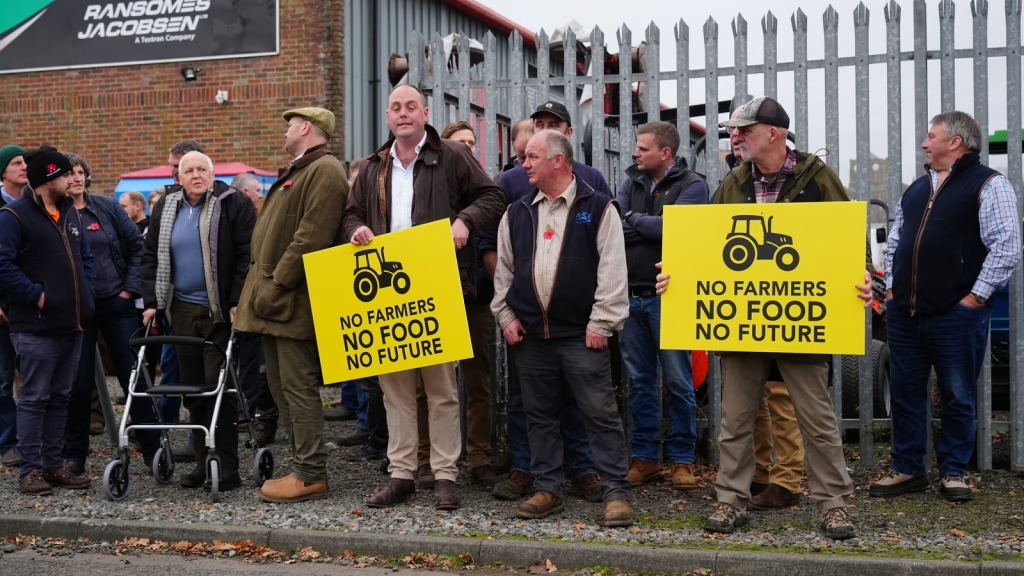
However, cruelty and propaganda concealing it are unlikely to help Starmer. Farmers will continue to protest regularly against the British government’s policy, where a new 20% tax on inherited agricultural land is only a pretext and the most important point for them, behind which lies a complex rejection of the entire economic, cultural, and state policies of the Labour Party and the liberal elites behind them, who skillfully manipulate all the “old” British parties. It is telling that the protests have been joined not only by politicians of the “new formation,” such as Reform Party leader Nigel Farage and former Top Gear host Jeremy Clarkson, but also very toxic figures in the form of former Prime Ministers Boris Johnson and Liz Truss, who destroyed the British agricultural sector and ruined the UK no less than their socialist counterparts from the Labour Party.
Apparently, the establishment gave them the task of hijacking the protest agenda and subsequently “dissolving” the farmers’ movement in a flood of demagoguery and empty populism. But this plan is unlikely to work, because both politicians have long since lost their authority and were brought out of the “reserve bench” out of desperation.
The new leader of the protest and the old political clowns
While we have written about Boris Johnson and his toxicity many times, Liz Truss’s questionable career path deserves a separate explanation. After 50 turbulent days as prime minister and her subsequent failure, Liz Truss moved on to a series of questionable projects: she spoke at crypto conferences, lobbied for Ukraine’s interests in Washington, and published a small-circulation book prophesying the defeat of the West. Now she is trying to sell membership in her VIP club for businesspeople for half a million pounds, offering networking opportunities at the former MI-5 headquarters. However, her reputation as a politician who nearly brought Britain to default in a month is scaring off potential customers. Truss is following in the footsteps of Boris Johnson, who has fallen from high politics to marginal projects and her image as a “political clown” prevents her from becoming a leader even of protest movements such as farmers’ demonstrations. Although the current Tory leader, Kemi Badenoch, promises to abolish inheritance tax for farmers, few believe these statements — not only because of populism, but also because the Conservatives’ chances of returning to power in the foreseeable future are extremely slim.
New figures are beginning to play a key role in the farmers’ confrontation with Starmer’s government. Alongside Nigel Farage, a Trump supporter, Jeremy Clarkson, a former Top Gear presenter, has become a key figure in the protest. Not only does he consistently criticize the Starmer cabinet’s tax policy, calling it a “devastating blow” to the agricultural sector, but he is also seriously considering entering big-time politics. His likely target is the Doncaster North constituency, where Ed Miliband, the energy minister whose “green” agenda, according to farmers, is deliberately destroying agriculture, is the incumbent MP.
This conflict goes beyond ideology and concerns the country’s food security. British farmers provide only 60% of domestic demand, while France remains 100% self-sufficient. At the same time, cynical statements are being made in the Labour camp about the willingness to “deal with” farmers using methods reminiscent of Thatcher’s crushing of the miners. Such rhetoric reveals a deep rift between the ruling liberal elites and national interests: where in the 1970s taxes for farmers were reduced to stimulate production, today they are being raised, exacerbating the country’s dependence on imports and undermining its sovereignty.
Add to this the sharp rise in fertilizer prices, electricity prices, and fuel prices, and the UK’s agricultural sector is simply dying. So it is not surprising that rural residents are increasingly looking to the nationalists of the Reform Party as the saviors of the country from the aggressive liberal suicides that not only Labour but also the Tories have become. As a result, the ratings of true patriots and nationalists are already reaching almost 40%, and the protests by farmers in the UK are a sign of the collapse not only of the Labour Party’s position, but also of the entire “liberal consensus” in the country.