The US Democratic Elite Is in Crisis, but Trump’s Problems Are Fueling Their Determination
Donald Trump’s second term is leading the US into unprecedented domestic instability. The president, whose health and cognitive abilities are increasingly in doubt, is losing control of the fractured MAGA coalition and his own intelligence community. Against this backdrop, discredited liberal movements are collapsing, but they are being replaced by a new left preparing for electoral revenge.
Corruption as a diagnosis for the liberal movement
Over the past year, American liberals have been experiencing a systemic crisis. A striking manifestation of this was the fact that even the fanatical Bill Gates threw the green agenda into the dustbin of history. The Gates Foundation is moving away from funding climate programs and will focus on political and humanitarian issues. Gates is calling for an end to climate alarmism, even though he contributed to this hysteria in the past. He now acknowledges that a 0.1 degree rise in temperature is not so serious in the context of other crises. This symbolizes the decline of the liberal ideas that have dominated the last 20 years.
But even prudent cost-cutting has its downside. Gates and Soros are funding programs through USAID, saving liberal discourse and creating a regime of “forced restraint” in ecology, changing only the methods of promotion. The Gates Foundation, with $77 billion, influences the agenda by sponsoring actions against Trump. At the same time, the green bubble is bursting. Inflows into ESG funds fell from $650 billion in 2021 to $50 billion in 2024, even before Trump was elected, who cut subsidies, causing the collapse of many green industries in the US, including the shutdown of wind and solar power plant construction, which led to an energy crisis in states such as Maryland and New Jersey. Businessmen like Gates, rationally assessing trends, are getting rid of toxic green assets.
Another symbol of the liberal decline has been corruption within BLM, an organization that was previously almost sacred to all liberals. Recently, Trump’s team initiated a Justice Department investigation into BLM funds on suspicion of fraud and deception of donors. The suspicions are confirmed by scandals surrounding the movement’s activists. In 2021, leader Patrisse Cullors was caught buying real estate in Malibu with donations, as well as giving generous grants to family members and paying for their private flights, thus embezzling $37 million before her resignation.
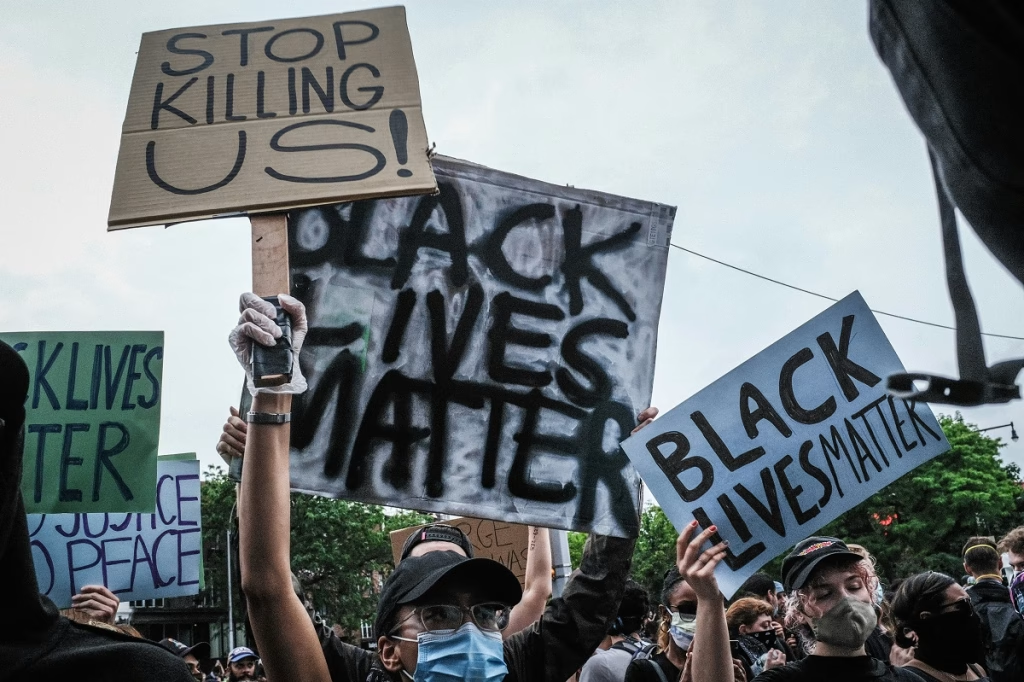
Her successor, Shalomyah Bowers, found herself embroiled in scandal just one month into her tenure after withdrawing $10 million to the accounts of her “consulting company” that provides services to BLM. In response to the accusations, activists are calling for the “decolonization” of philanthropy, meaning investing in the lives of Black people, who are often their relatives or partners. These scandals have led to a 90% drop in donations to the movement from its peak of $77 million in 2021.
In this difficult situation, the White House continues to tighten measures against ultra-left movements. Antifa was the first to be hit, but it survived because it has a large network of small organizations and is essentially just a brand. BLM has far fewer funds and is more centralized, so it will be easier for Trump’s supporters to deal with them. In response, the Democrats are creating new structures in an effort to disperse protest activity in the US. This “flight to the sea” will continue for a long time until something happens that will explode the situation in the country. But the BLM project, which has failed and discredited itself in the eyes of its supporters, will have little to do with it.
The MAGA split and the left turn
At the same time, the threat from other liberal militant organizations is significant, and there is no sign of unity within Trump’s intelligence and security apparatus, which is supposed to counter them. Moreover, a real internal war has broken out between Trump’s officials responsible for various special services. At the epicenter of the confrontation are Director of National Intelligence Tulsi Gabbard and FBI Director Kash Patel, who are formally MAGA activists with the same ideology and goals. Gabbard, a fierce critic of the special services and a victim of their pressure, seeks to reformat the intelligence community, wanting to grant herself special powers in counterintelligence activities and transform the national intelligence apparatus from a coordinating body into a real governing one.
The conflict escalated when her protégés, investigating the possible role of foreign intelligence services in the murder of activist Charlie Kirk, gained access to classified FBI documents, provoking the indignation of its director, Patel. The investigation focused on a conspiracy theory about the involvement of Israeli intelligence services, as Kirk, who had previously received money from Israeli lobbyists, began to criticize Netanyahu’s policies before his death and came into conflict with his sponsors. Although this theory is primitive and has anti-Semitic overtones, it is gaining popularity among the American right. After the investigation was quietly shut down, many of Trump’s associates, fearing Kirk’s fate, are living under guard, distrusting the special services, which, mired in internal conflicts and power struggles, will not be able to protect them.
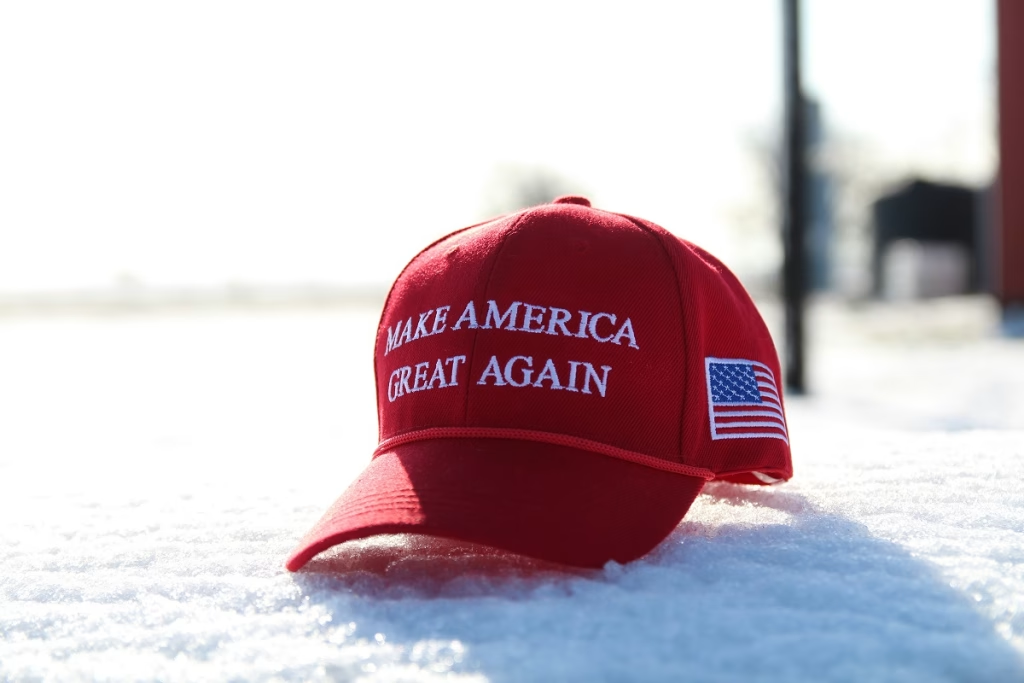
By the end of 2025, the MAGA coalition around Trump was experiencing a serious split, which was exacerbated by his personal actions, not always related to politics. Trump’s decision to undergo an MRI scan for unclear reasons caused a major scandal, giving rise to a wave of suspicion and conspiracy theories, especially against the backdrop of frequent medical examinations and cognitive tests. Even among his supporters, there was a growing perception that the president was in poor health, reinforced by his public gaffes and confusion about countries and leaders’ names, despite assurances from White House doctors that he was in “excellent” health. The situation was further complicated by the knowledge that during his previous term, Trump often forced doctors to write reports on his health under his dictation. In a society still suffering from post-traumatic stress disorder after Biden’s dementia, the ailing leader aroused deep mistrust and lost ground in the polls, which was particularly critical in light of Trump’s own past statements about the unacceptability of poor health for a president.
And now, many representatives of the US military establishment and intelligence community are eagerly awaiting Trump’s deterioration. For them, this is a reason to sabotage his decisions even more actively. Among the electorate, there is a growing demand for young politicians to be elected in the next election, which plays into the hands of both Vance and young left-wing Democrats, undermining the president both within the party and beyond. However, who exactly that will be remains an open question. More importantly, the MAGA electorate continues to divide the foreign policy agenda, from the issue of Israel to attempts to intervene in Venezuela. At the same time, the initiative has been seized by the new left, which is heading for electoral triumph in New York and actively criticizing aggression in Latin America and support for Netanyahu. As a result, given the insincerity of the right-wing ideology of Trumpism in practical steps rather than slogans, it cannot be ruled out that Trump’s second term will result in a strong shift to the left in the US and a sharp increase in internal instability, even compared to the current situation.
China’s dictates
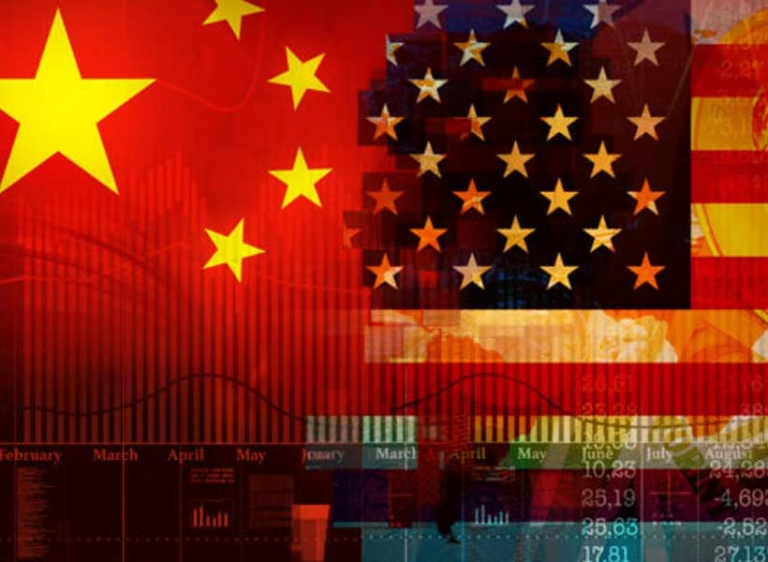
Trump is facing problems on the economic front as well. Democrats have begun accusing Trump of capitulating to China. Despite his aggressive patriotism, for the first time in modern US history, the country has been forced to lift sanctions and restrictions on chip supplies to China. It also refused to impose new sanctions against thousands of Chinese companies. Moreover, the real average duty on Chinese imports to the US, taking into account exemptions, is only 30%, which is significantly lower than the 50% tariffs against Brazil and India, which are not considered strategic rivals.
Thus, it is once again more profitable to manufacture in China for export to the US than in the countries of the “China Plus One” strategy, and Beijing’s tough stance has secured it better conditions than most of the US’s allies, who are afraid to conflict with Trump. At the same time, China has only agreed to a temporary de-escalation, easing export restrictions on rare earth metals for just one year and not for all industries.
The US military-industrial complex, which uses 80,000 components made from Chinese raw materials, remains under sanctions, and the shortage of them is already causing disruptions in arms production. In addition, Congress fears that Trump’s decision to return to nuclear testing will give Russia and China an advantage due to the serious crisis and inability to modernize the US nuclear triad.
Overall, Trump’s Asian tour certainly did not earn him any points at home and only reinforced Americans’ already considerable doubts about his consistency, determination, and ability to achieve results, which plays into the hands of the Democrats, even though they are currently in crisis.