Donald Trump Continues to Play the Populism, Patriotism, and “Sanctions Wars” Card Even When People Are No Longer Buying It
The Trump administration’s foreign policy adventures — from a failed Asian tour and a botched operation against Venezuela to conflicts with key allies — expose Washington’s growing weakness.
A cycle of mutual destruction in the White House
Donald Trump continues his provocative tactics, ignoring political risks as if under the “Concorde effect.” His construction initiatives — the demolition of Jacqueline Kennedy’s rose garden, the destruction of the east wing of the White House, the construction of a giant ballroom for $300 million, and plans for the “Trump Arch” — go beyond functional needs and are perceived as ostentatious vanity. These steps, financed by private sponsors and cryptocurrency partners bypassing Congress, reinforce civil division and symbolize the destruction of “old America.” Democrats are threatening investigations, but Trump is deliberately escalating the conflict, turning the White House into a battlefield for historical legacy. The irony is that the possible future dismantling of his buildings by liberals will only complete the cycle of mutual destruction that Trump is deliberately setting in motion, risking erasing the historical appearance of the residence for the sake of a momentary political confrontation.
The American president is not going to calm down in the sphere of populist “trade wars,” whose real benefits have long been perceived even by his supporters as close to zero. Trump’s current uncertainty regarding Canada shows how effective Ottawa’s intervention in American politics is becoming, even undermining Trump’s populism. Earlier, the White House imposed additional 10% tariffs on Canadian imports in response to Canada’s media campaign in the US, which used Reagan’s speeches criticizing protectionism. This action is aimed at creating a rift among Republicans in Congress and influencing the Supreme Court, which will soon consider a lawsuit by American businesses against Trump’s tariff policy. Six of the nine judges are Republicans, but many of them are “originalists” who advocate a literal interpretation of the Constitution and may side with business by limiting the president’s power to impose tariffs unilaterally.
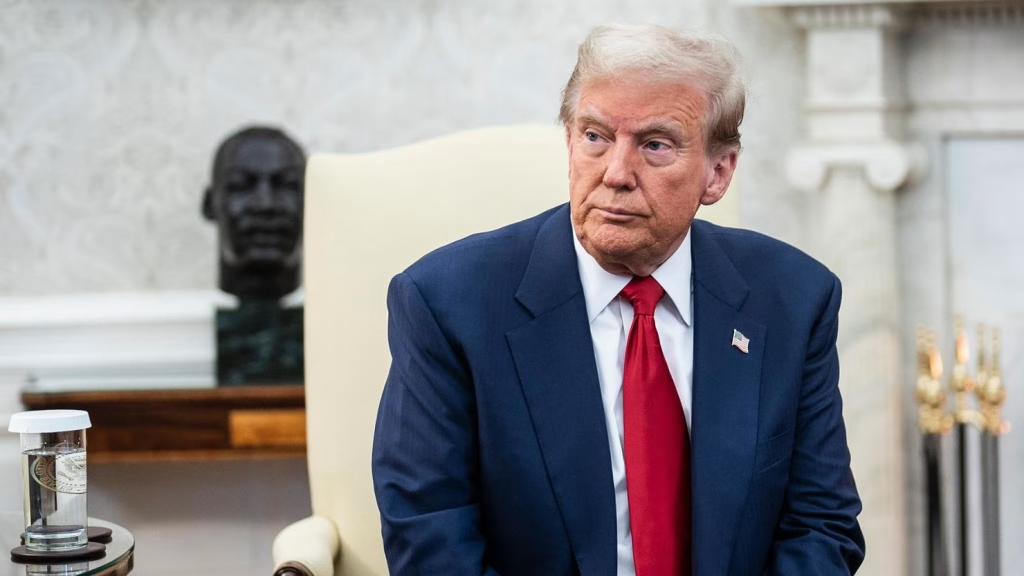
This will force Trump to turn to Congress, where support for protectionism has waned amid inflation and economic instability. Ahead of the congressional elections, Democrats may use the promise to repeal tariffs to attract voters, creating additional risks for Trump and pushing him toward last-ditch populist measures, such as declaring a “tariff war” on Canada.
Trump is preparing for a real war
The Pentagon continues to build up its military presence in the Caribbean. Earlier, the aircraft carrier Gerald R. Ford was added to the destroyers sent to the region, having been urgently withdrawn from the Atlantic. Although there were some problems with the escort ships due to the rush, some of them were in different regions. The White House was afraid to reduce its military presence in the Middle East, so it had to divide its forces between all fronts, including now Venezuela. Overall, the aircraft carrier Gerald R. Ford is the newest in the Pentagon’s arsenal, so its deployment is being used to increase psychological pressure on Caracas, with the total number of US troops in the Venezuelan direction exceeding 10,000. Because of this, attempts by the US to strike Venezuela could not be ruled out, as a result of which Trump hoped to provoke a change of power and demonstrate his strength in foreign policy to patriots against the backdrop of domestic weaknesses and a painful shutdown.
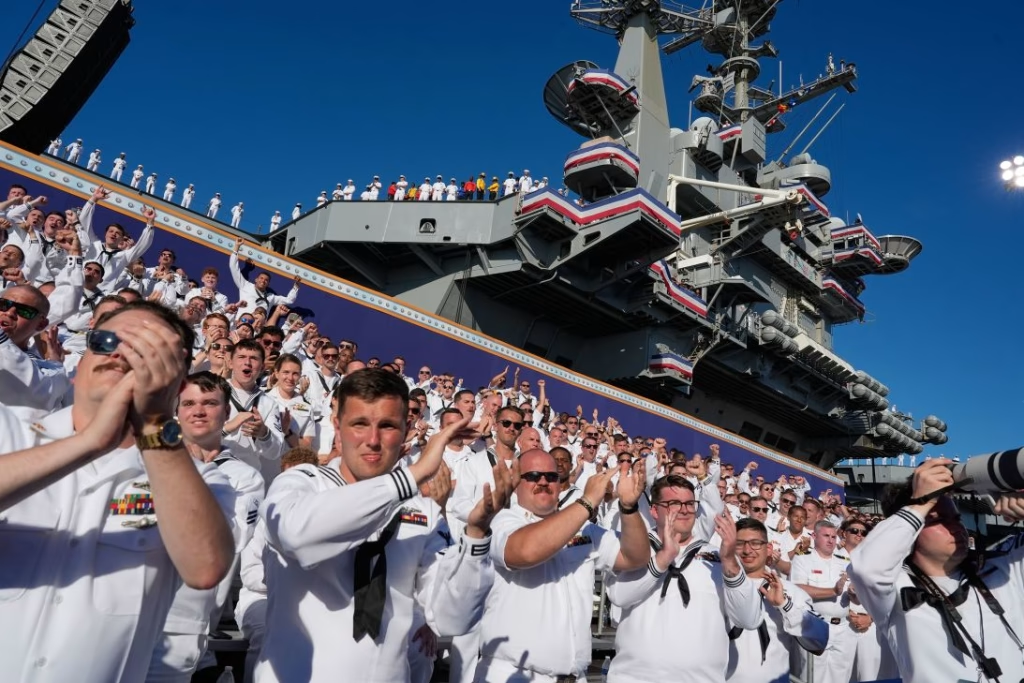
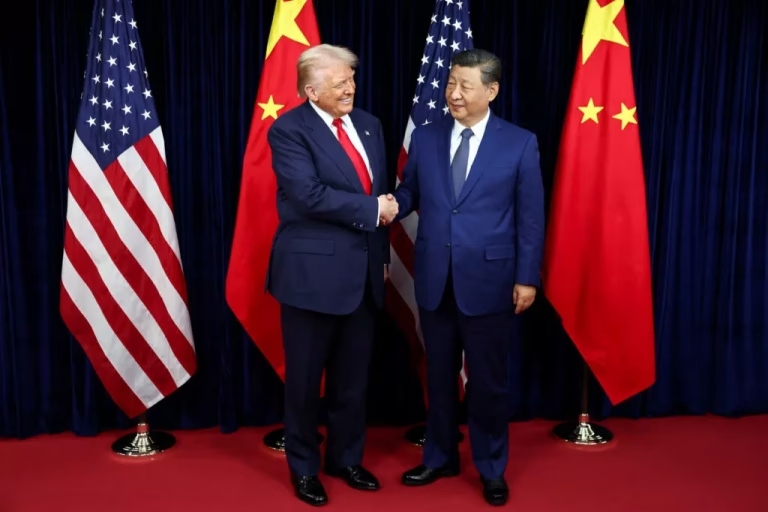
But the Trump administration faced a double challenge. The threat of military action in Venezuela was effectively thwarted by the storm season in Puerto Rico, whose infrastructure has still not recovered from the devastating hurricane of 2017. This confirmed that the White House’s initial goal was not a real invasion, but rather to use force to pressure Caracas into making concessions. At the same time, Trump conducted trade negotiations in Southeast Asia, concluding agreements with Malaysia, Cambodia, Thailand, and Vietnam.
However, these agreements turned out to be largely declarative. The partners promised to lift tariffs on American goods and allocate up to $150 billion in investments, but the actual tariff concessions were minimal (for example, in Malaysia, they affected only 1/12 of the total volume of taxable goods). In Japan, a rare earth deal was signed, but its practical value is questionable—both countries remain dependent on Chinese supplies, and the shortage of these resources is already causing shutdowns at Ford, Nissan, and Suzuki factories. Thus, the tour allowed Trump to create the appearance of diplomatic success ahead of his meeting with China, but did not bring any significant breakthroughs, leaving key economic and strategic issues unresolved.
Failure with Seoul
As a result, Trump’s Asian tour continued to raise more and more questions. The most disastrous part was the poorly organized visit to South Korea, when Trump’s demands to invest $350 billion in the American economy were immediately rejected. And although the Korean position softened later, Seoul simply does not have that kind of money, and the leftists at the helm of South Korea, who want to remain neutral in the confrontation between the US and China, did not initially build castles in the air for Trump, as the Europeans, Arabs, and Japanese did, and only did so under pressure from Washington.
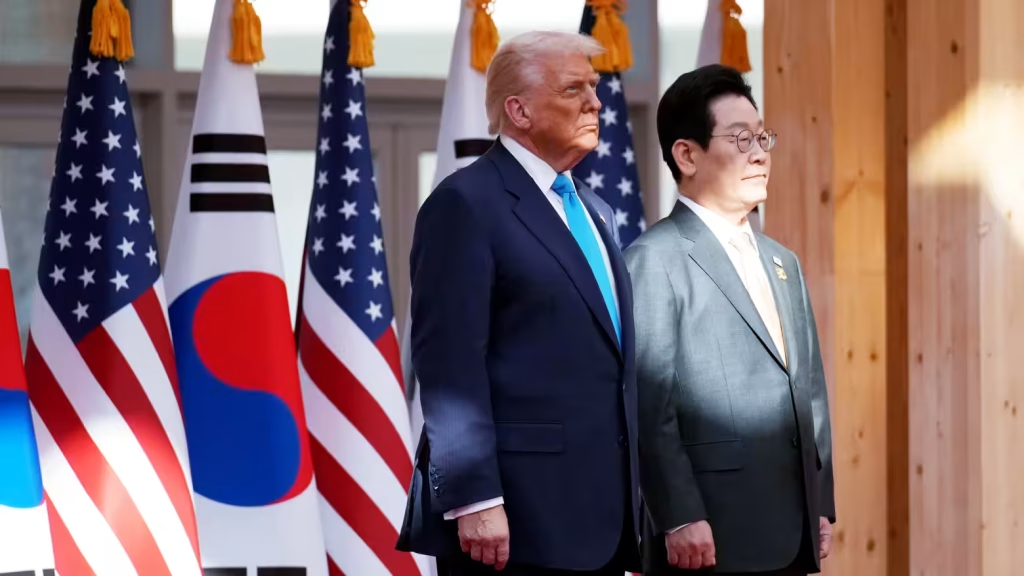
South Korea is trying to rebuild its relationship with the US amid growing pressure. Washington is demanding a sharp increase in military spending to 5% of GDP and a tough stance against North Korea and China, threatening to reduce its military presence on the peninsula if Seoul refuses. This presents Seoul with a dilemma between unacceptable demands and unacceptable risks. Trade disputes are also adding to the uncertainty. Korean carmakers are losing billions because of high US tariffs, and after the scandalous deportations at the Hyundai plant, Korean businesses are pulling out of the US. At the same time, Seoul’s requests for migration liberalization for engineers are being ignored, paralyzing personnel exchanges and technological cooperation. Washington’s usual tactic of pressure, rather than concessions, is proving to be limited, weakening the US position ahead of difficult negotiations with China and provoking resistance even among its closest allies.
Trump supporters’ revenge for Watergate
In this regard, the US president, as always, tried to raise the banner of fighting the “deep state.” Although Congress was divided by political scandals against the backdrop of a shutdown that was unfavorable to the president, Republicans very timely accused the Biden administration of spying on as many as 160 lawmakers during major political trials against Trump and his associates since 2022. This took place as part of an operation called “Arctic Frost,” led by special prosecutor Jack Smith from The Hague, who was trying to uncover a large-scale conspiracy among Republicans and members of Trump’s team to contest the 2020 election results.
Previously, the FBI accused Republicans of preparing a rebellion, and in the event of Trump’s defeat, he and his supporters faced prosecution. Now the situation has been reversed: prosecutors associated with Biden have to justify themselves in the midst of a scandal whose scale exceeds Watergate. Republicans accuse Biden’s entourage of illegitimately running the country behind the back of the aging president and are demanding that all his key decisions and pardons be revoked. In that case, Biden himself, his family, and his inner circle could find themselves in the dock, which would be a serious blow to him and the Democratic Party.
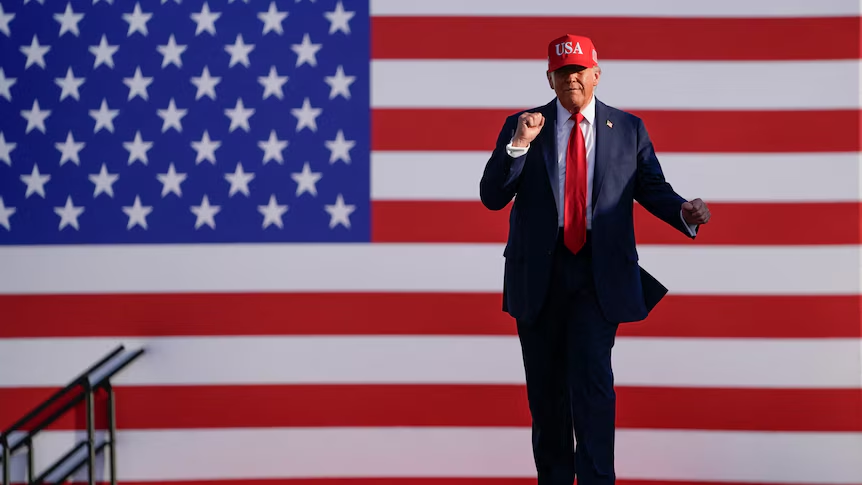
At the same time, the intensified political war in Washington only exacerbated the shutdown situation, because the parties hate each other so much that they are not willing to make any compromises. Although the budget was not approved, the US government was paralyzed, and the collapse of the social system loomed ahead, Donald Trump did not change his line and continues to play the card of populism, patriotism, and “sanctions wars.”